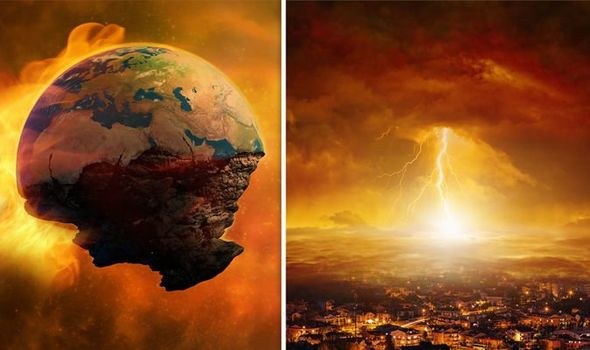
We’re used to hearing that Earth has roughly 5 billion years left before the Sun expands into a red giant and swallows it whole. It sounds like an eternity.
It’s also the wrong deadline.
Earth’s true expiration date arrives much sooner—not with an explosion, but with a slow, inescapable simmer. As the Sun burns through its hydrogen, it gradually brightens, boosting its energy output by roughly 10% every billion years. That may sound tiny, but across geological time, it’s catastrophic.
In about 1 billion years, that extra heat will break Earth’s climate balance. Rising temperatures will cause the oceans to evaporate and bleed into space, stripping away our atmosphere. Complex ecosystems—forests, animals, and any trace of civilization—will collapse.
Earth’s story as a living world will end long before its story as a rock.
For billions of years after life vanishes, a baked, barren Earth will continue silently orbiting its star. Only after an unimaginable span of desert silence will the dying Sun finally swell into a red giant, potentially consuming the husk of our world while briefly warming distant bodies like Mars.
The 5-billion-year clock marks the end of the planet. The 1-billion-year clock marks the end of us.